NGIS · First Edition, 2024
NO GODS IN SPACE
Before reaching the stars, we should have mapped the mind, not to measure its depth, but to understand its capacity for distortion. It does not simply grow with knowledge; it reorganizes itself around what it cannot face. What we think is expansion is often compression folded inward.
We escaped gravity with equations we never understood, carrying psychologies we never faced. Every advance contained the same concealed fear: exposure. The systems we built were meant to stabilize reality; they absorbed the instability we refused to confront.
Memory does not preserve events. Trauma does not scar cleanly; it rewrites the map. Beneath conscious thought, older mechanisms continue their work, suppressing, prioritizing. Decisions appear in awareness already resolved elsewhere.

There will come a moment, not in centuries, but in a breath, when a brain will not be touched by time or trauma, but by a quantum whisper.
A single entanglement. Measured not in information, but in feeling.
Not chemical. Not digital. But something finer. A resonance. A pattern. A weight.
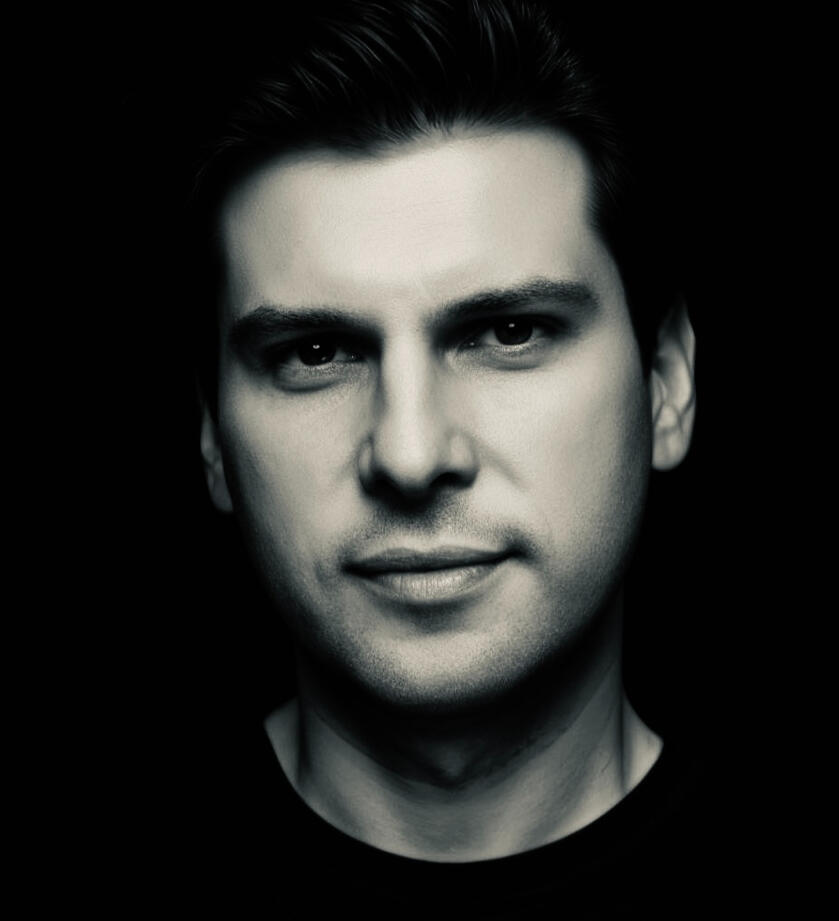
About me
I was born near the end of a regime that announced itself as permanent. It collapsed. That was my first lesson in architecture: power hardens itself in concrete; time dissolves it without ceremony.I learned to prefer structures to promises. Under strain, a beam reveals its limits. Under strain, a person reveals something less measurable. Steel confesses through fracture. Institutions rarely do. I stayed with what confessed.During the years this book took shape, one figure in my life began drifting away in fragments, memory thinning, names loosening, entire decades receding as if submerged. At the same time, another presence gathered at the threshold of existence, not yet breathing, already altering the geometry of my decisions. One consciousness fading. Another approaching. I stood between them, aware of how provisional identity really is.Work continued. Projects advanced. Deadlines aligned. Systems functioned. Underneath it all ran a quieter calculation: how much of a human can disappear before the outline no longer holds.The novel emerged from that interval.It asks what remains when optimization replaces uncertainty, when efficiency compresses ambiguity, when survival becomes a technical objective rather than a shared myth. It examines scale, how institutions grow, how technologies extend, how recursion replaces intention, and what happens to interior life under that expansion.If you sense tension in these pages, it comes from proximity. The proximity of loss. The proximity of arrival. The proximity of systems that do not pause for either.You, reading this, occupy a similar space. You exist between inheritance and projection, between memory and anticipation, inside structures larger than your lifespan.When continuity belongs to the system, what anchors the individual?Marius L Nasgodineanu